About
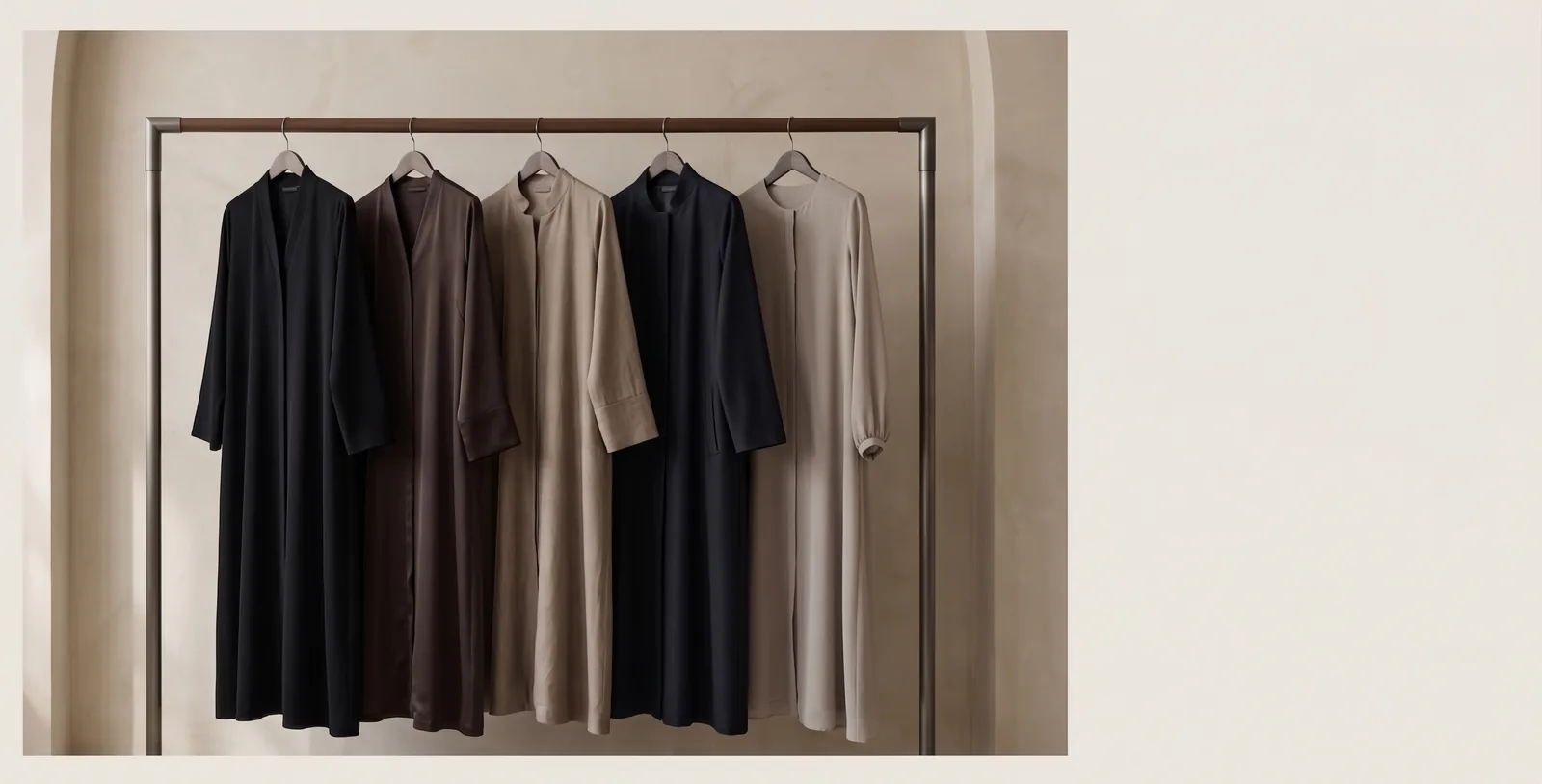
A small workroom, a short collection
We cut abayas in the UAE, photograph them honestly, and answer every question ourselves. There is no shop floor and no call centre — there is a workroom and a phone.
Why the collection is short
Twelve pieces is a decision, not a limitation. A short run means every cut is one we have made repeatedly, in fabric we buy in the same weight each time, on a size run we know falls correctly from 52 through 60. A hundred pieces would mean guessing at most of them.
Nothing here is dropshipped and nothing is bought finished and relabelled. When a piece sells out it stays on the site marked sold out until we cut it again, because a collection that quietly rearranges itself is impossible to trust.
How a piece is made
Cloth is cut flat, sewn, pressed and hung. Hems are set by hand on the occasion and embroidered pieces, machine-finished on the everyday cuts where a heavier crepe does the work instead. Zari and thread work is done before assembly, so the motif sits on the panel rather than across a seam.
Every cut is graded across the full size run rather than scaled from one sample, and the finished length in centimetres is published against each size on the piece's own page. That number is the one we measure from shoulder to hem on the finished garment, not a pattern measurement.
How you enquire
This site is a catalogue, not a shop. There is no cart and no checkout. You send a message on WhatsApp — the button on any piece writes it for you, with the name, the reference and the size already filled in — and we answer it ourselves.
That is deliberate. Most questions worth asking about an abaya are questions a form cannot take: whether the crepe is heavy enough for wind, whether a 56 will fall too long, whether the sleeve will sit right over a cuff. Those get answered before you commit, by the people who cut the piece.
Where we are
BLACK ZONE ABAYA is based in the UAE and every piece is cut and finished here. Delivery is . Full contact details, including the trading address, are on the contact page.
Fabric
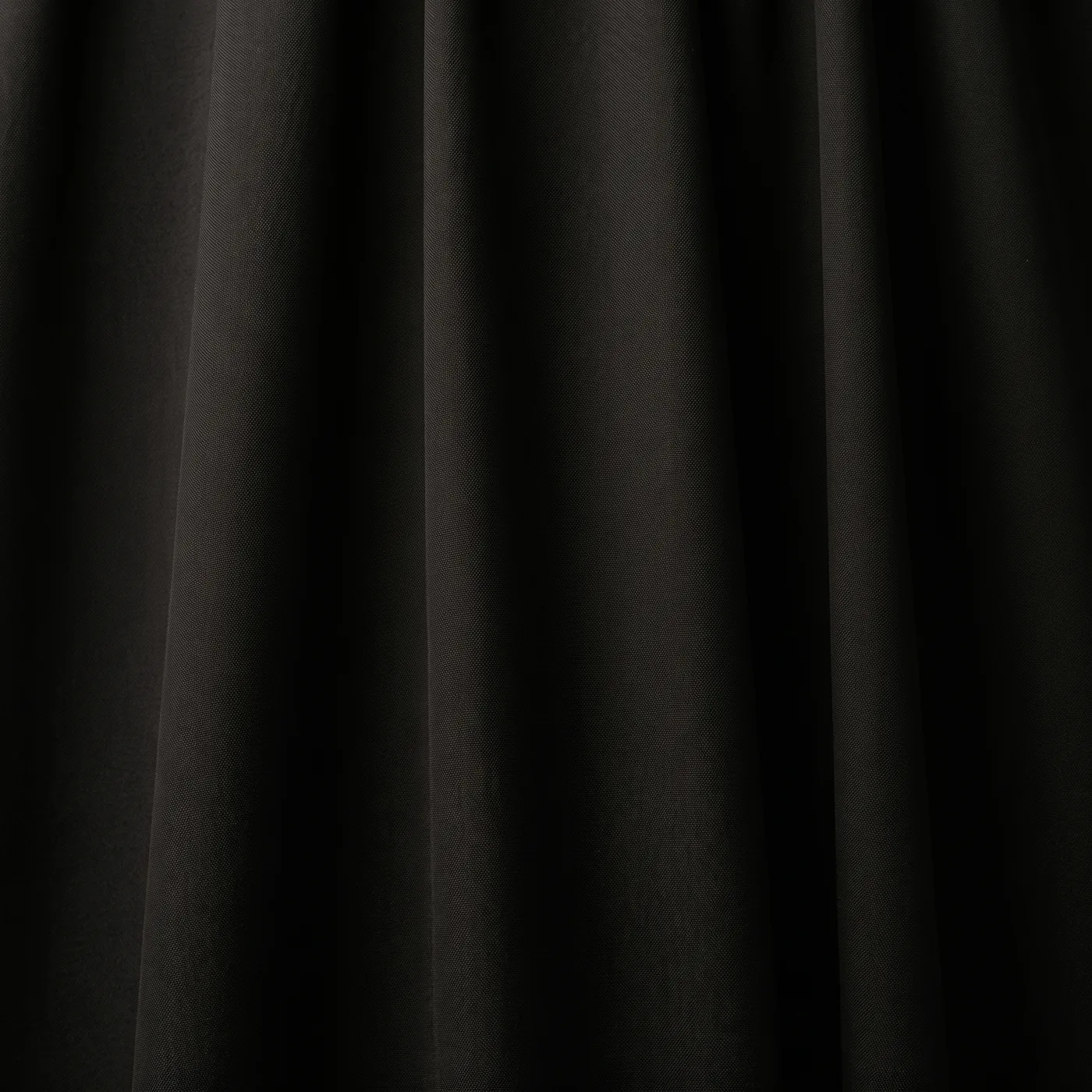
Three cloths, and what each one is for
- Japanese nida crepe
- Matte, dense, heavy enough to hang straight in wind. It does not flash under a phone camera, which is the point.
- Silk-touch satin
- Used only where a piece needs movement. Pleats set into it come back into line after a long sit.
- Washed linen blend
- Dry to the touch and cooler than crepe. It creases — that is what it is meant to do.